

How to Choose the Right Flight School: A 10-Point Checklist (2025 Guide)
- Sep 25, 2025
- 7 min read
Selecting the right flight school is one of the most critical decisions an aspiring pilot can make. It’s not just about finding a place to learn how to fly—it’s about building the foundation of your entire aviation career.
A wrong choice can set you back by years, waste thousands of dollars, and even discourage you from continuing altogether. But when you find the right aviation academy, the rewards are immense: faster progress, stronger support, better job prospects, and an overall more enjoyable experience.
Whether you’re just starting your pilot journey or comparing aviation schools across different countries, this 10-point checklist will give you the clarity you need. These aren’t just suggestions—they’re essential factors that separate the best flight schools from the rest.
What to Look for in a Flight School: 10 Things That Matter Most
Before you commit to any program, these are the 10 key areas you must evaluate. They apply globally—whether you're training in the United States, Europe, Africa, the Middle East, or anywhere else.
1. Flight School Accreditation and Licensing
The very first thing to check is whether the flight school is officially accredited by the aviation authority in its country. For example, in the U.S., that would be the Federal Aviation Administration (FAA); in the U.K., the Civil Aviation Authority (CAA); and in South Africa, the South African Civil Aviation Authority (SACAA).
Accreditation ensures that the training meets legal and professional standards.
If you’re an international student, make sure the license you'll earn is valid or easily convertible in your country or region of intended work. A school might offer excellent local training but issue a license that limits your career options internationally. Always ask, “Is this license ICAO-compliant, and can it be converted if needed?”
2. Type of Licenses and Training Programs Offered
Not all pilot training schools offer the same qualifications. Some only train for a Private Pilot License (PPL), while others offer full programs leading to a Commercial Pilot License (CPL) and an Airline Transport Pilot License (ATPL).
You should also understand whether the school follows an integrated or modular training structure. Integrated programs are full-time and intensive, often completed faster and with a group of other students together but at a higher upfront cost.
Modular training lets you pace yourself and is more flexible. Rather thab being in a class with numerous students, you get your own personal instructor. Modular training can take longer, depending on your schedule as it is flexible.
Choose a school that aligns with your long-term aviation goals. If you're serious about becoming a professional airline pilot, ensure the school offers a clear path to CPL or ATPL.
3. Fleet Size and Aircraft Type
The aircraft you train on plays a significant role in your development. A school with a large, well-maintained fleet offers more scheduling flexibility and less downtime due to maintenance. The more aircraft a flight school has, the more opportunities students have to fly, which means quicker progress. Conversely, with fewer aircraft, training tends to be slower.
Check if the school provides both analogue (traditional round gauge cockpit) and glass cockpit (digital screen) aircraft. As most commercial airliners today use glass cockpit technology, exposure to both systems prepares you for modern aviation environments.
Training on a diverse fleet helps you become a more adaptable and confident pilot, which airlines and employers value.
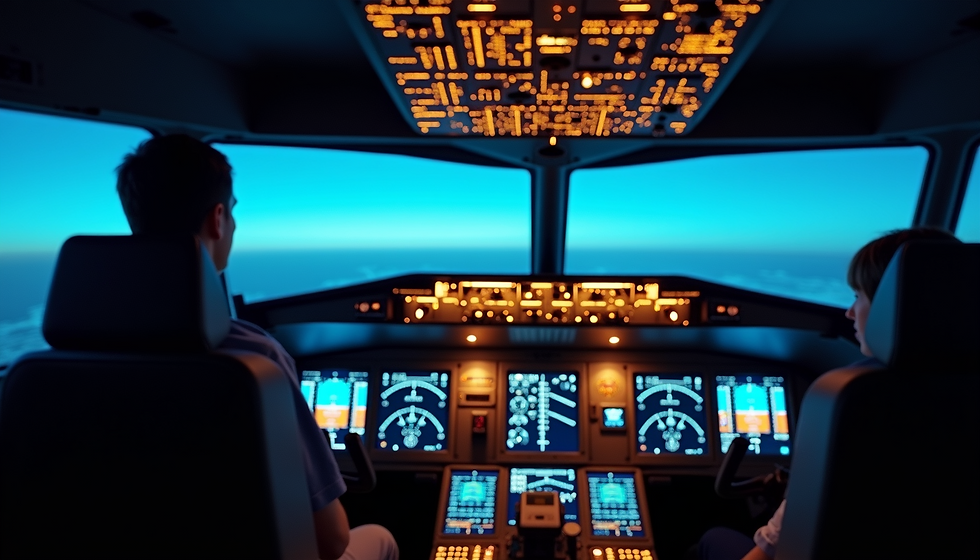
In addition, the type of aircraft you fly makes a big difference in overall cost. For example, training on a Piper or Sling is significantly cheaper per hour than training on higher-cost aircraft like a Cirrus, Mooney, or Diamond, even though the training outcome is the same.
A small difference—say $30 per hour—may not seem like much, but across 200 hours of flight time, that adds up to an extra $6,000. This is why aircraft type is a crucial factor to consider in flight training.
4. Instructor Quality and Student-Instructor Ratio
An excellent flight instructor can make or break your training experience. Look into the experience level, certifications, and teaching history of the instructors at the school. Do they have real-world commercial flying experience? Are they passionate about mentoring students?
Also, ask about the student-to-instructor ratio. A lower ratio often means more personalised attention, better progress tracking, and faster learning. And find out whether you’ll be assigned to one main instructor or rotate through several—consistency can significantly impact how quickly and effectively you learn.
5. Flight School Safety Record and Aircraft Maintenance
Safety should never be compromised. Ask the school about their safety record—have they had any incidents in the past five years? Are they regularly audited by aviation authorities?
Well-maintained aircraft reduce the risk of mid-air or mechanical incidents, and they also prevent frustrating cancellations and rescheduling. A reputable flight school will not only have up-to-date maintenance logs but also be transparent about its safety protocols.
If they hesitate to answer questions about safety, that’s a red flag.
6. Availability of Flight Simulators

Flight simulators are an essential part of modern pilot training. They allow you to learn complex procedures, emergency protocols, and advanced manoeuvres without the cost or risk of flying an actual aircraft.
A good flight school will have high-quality simulators, ideally covering both analogue and G1000 (glass cockpit) configurations.
You should also check whether simulator training is included in the course fee or charged separately. Sim time can enhance your confidence, reduce flight hours needed in real aircraft, and better prepare you for airline-style scenarios.
7. Location and Weather Conditions for Flying
One often-overlooked factor is the location of the flight school and the local weather. Schools located in regions with consistently good weather like South Africa allow for more flying days per month, which means faster course completion.
But weather isn’t everything. Consider the cost of living, transportation, and accommodation in the area. Is it affordable? Is the town or city safe and student-friendly? These lifestyle factors can impact your training experience more than you might expect.
Training in an area with controlled airspace also helps you gain experience communicating with Air Traffic Control, an essential skill for airline pilots.
8. Transparent Flight School Pricing and Cost Inclusions
Cost is a huge factor—but it’s not just about choosing the cheapest flight school. What matters more is pricing transparency. Many flight schools scam students by advertising unrealistically cheap quotes.
They list only the minimum legal hours and leave out hidden costs like exams, landing fees, medicals, fuel surcharges, and even uniforms. Once you arrive, you quickly realize the actual cost is far higher — sometimes tens of thousands more.
That’s why it’s critical to ask: Is the quote all-inclusive? Does it assume the minimum hours, or does it reflect the realistic average? What’s the school’s track record? Does the school provide a clear breakdown of what’s included in the fees? Are there hidden costs for ground school, landing fees, examiner fees, fuel surcharges or instructor hours beyond the basics?
Without transparency, many aspiring pilots end up broke, delayed, or unable to finish their training.
Make sure to compare what each quoted fee actually covers. Some schools may appear affordable but exclude essentials like exams, books, or simulator time. A more expensive school that includes everything might actually be better value. Remember, if it’s too good to be true… it's because it isn’t.
9. Graduate Success Stories and Reviews

One of the best indicators of a school’s quality is the success of its alumni. Where are their graduates now? Are they working for airlines, charter companies, or instructing?
Check online reviews, ask for testimonials, and if possible, speak with former students. Their experience will give you insights into the culture, training quality, and long-term value of the school.
A good flight school will be proud to showcase its alumni network and will gladly put you in touch with former students.
10. Support Services and Visa Help for International Students
If you’re traveling from another country for training, support services become even more critical. Ask if the school offers help with visa applications, accommodation arrangements, airport pickups, or licensing conversion assistance.
Beyond the logistics, also consider how responsive and supportive the administrative team is. Do they answer questions promptly? Are they patient with enquiries? The level of support you get outside the cockpit often reflects the overall student experience.
Some schools even offer mentorship, including career guidance, help with airline applications, or partnerships with aviation employers. These extras can make a big difference in transitioning from student to professional pilot.
Choose the Flight School That’s Right for You
Stacking up flight schools is one of the most difficult and decisive parts of becoming a pilot. It can mean the difference between success and failure. With hundreds of schools around the world promising “the best,” the decision can feel overwhelming.
Even though this article explains a lot, there are still countless red flags and hidden factors you won’t easily spot without experience. The reality is, if you don’t know what to look for—or you’ve never done it before—you’re almost guaranteed to make costly mistakes.
This is where Zino Aviation comes in. The company was founded with one mission: to help and support aspiring pilots and protect them from being misled, scammed and from making wrong and uninformed decisions. Over the years, Zino Aviation has guided hundreds of thousands of aspiring pilots, ensuring they make smart, informed decisions.
Unlike random schools that advertise unrealistic “cheap” quotes only to pile on hidden fees later, Zino Aviation works exclusively with partner flight schools that have been thoroughly vetted and audited. These schools are professionally recommended because they meet strict criteria such as:
No hidden charges — transparency from day one.
Large, modern fleets — 10+ aircraft and multiple instructors to ensure steady training progress.
Accreditation — fully approved and internationally recognised flight schools.
High-quality, affordable training — balancing cost and excellence.
Safe and supportive environments — with good facilities and strong student experiences.

By partnering with these schools, Zino Aviation ensures a certain level of accountability and quality control. Because they place large groups of students, they also have leverage with the schools—meaning they can intervene, advocate, and ensure students get the support they need.
Currently, Zino Aviation offers two main training pathways:
SACAA CPL (South Africa) — Best for Africans, Asians, Middle Easterners, and anyone seeking an ICAO license that allows them to fly globally.
EASA ATPL (Europe) — Best suited for Europeans or those specifically needing an EASA license for European airline careers.
Whether you’re starting in South Africa or Europe, Zino Aviation ensures you train at the right place, with the right people, and without the risks of being misled. Feel free to reach out for a consultation.


Comments